Care that supports healthy-looking skin and hair.
Personalised Ayurvedic wellness guidance for skin and hair concerns, shaped around your symptoms, lifestyle, food habits, stress and individual needs.
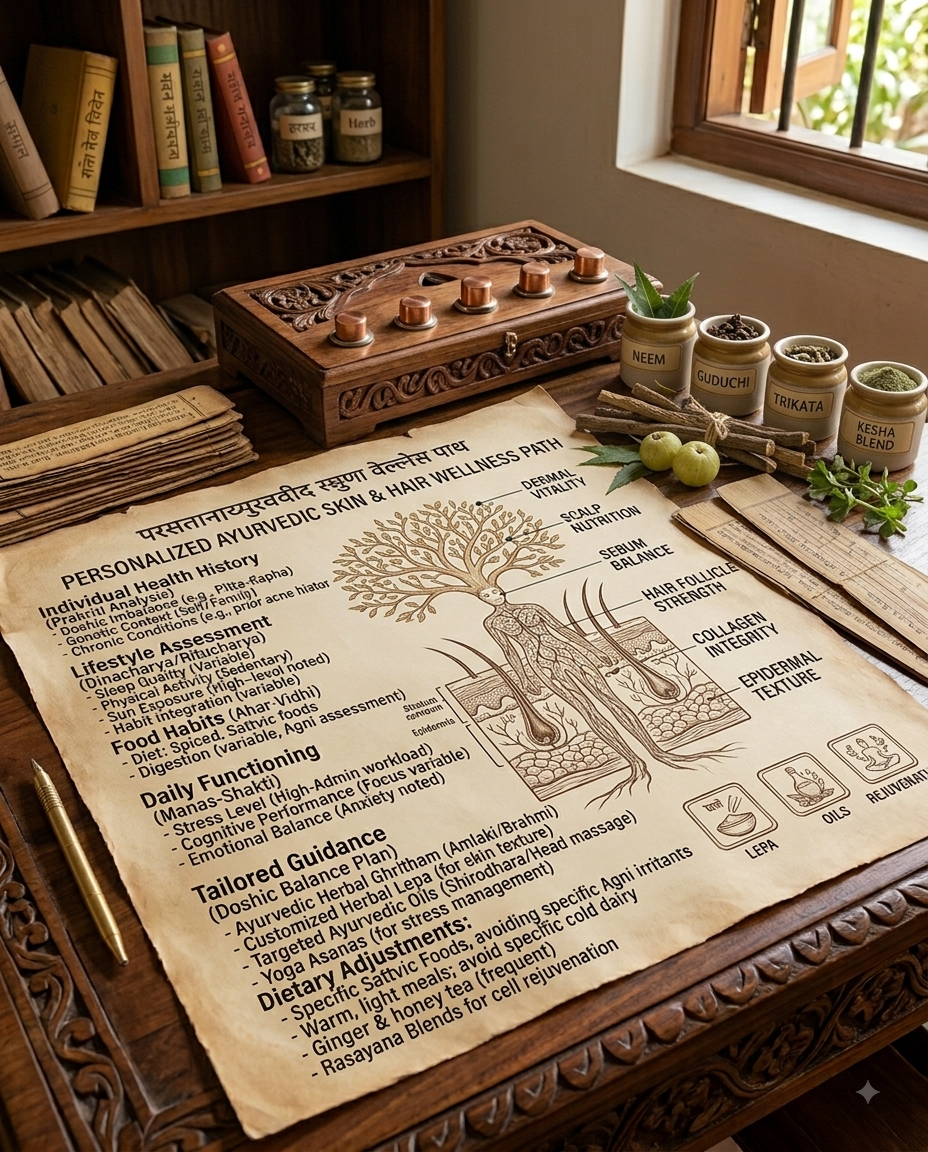
Thoughtful support for skin comfort and hair wellness.
Skin and hair concerns can be influenced by routine, sleep, stress, nutrition, environment and overall health. Your consultation looks at the complete picture.
Eczema Support
Wellness guidance for dry, irritated or recurring skin discomfort alongside medical care.
Acne & Breakouts
Personalised support for daily habits and lifestyle patterns affecting acne-prone skin.
Hair Fall Support
Guidance for hair wellness, scalp care, diet and lifestyle factors.
Dandruff & Scalp Care
Support for recurring flaky scalp, itchiness and scalp-comfort concerns.
Psoriasis Support
Complementary wellness guidance alongside dermatologist-led assessment and treatment.
Skin Dryness
Practical guidance for dryness, rough texture and seasonal skin-care needs.
Allergy-Prone Skin
Supportive guidance for identifying patterns and building a gentler daily routine.
Skin & Hair Wellness
Build sustainable habits that support confidence, comfort and everyday wellbeing.
Care that looks beyond the surface.
We consider your concerns alongside your routine, diet, stress, sleep, environment, current products, health history and Ayurvedic constitution.
Important safety note
Seek prompt medical assessment for a rapidly spreading rash, facial swelling, breathing difficulty, painful blisters, fever with rash, infected skin, sudden patchy hair loss or any changing mole or skin lesion.
Detailed health discussion
We understand your symptoms, duration, triggers, skincare routine, diet, sleep, stress and current treatments.
Constitution assessment
Your Prakriti and current imbalance patterns are assessed using Ayurvedic principles and Nadi Pariksha where appropriate.
Personalised guidance
You receive practical recommendations for food, routine, skin and scalp care, and Ayurvedic medicines when suitable.
Clear next steps
A simple plan helps you follow recommendations consistently and review progress when needed.
Practical guidance for a gentler daily wellness routine.
Food & lifestyle guidance
Explore daily habits, rest, hydration and food choices that may support your overall wellbeing.
Skin and scalp routine
Receive practical guidance to help simplify and make your personal-care routine more consistent.
Individualised plan
Your recommendations are shaped around your concerns, lifestyle and current medical guidance.
Skin and hair wellness FAQs
Can Ayurveda cure eczema, psoriasis or acne?
These conditions can have different causes and may require medical diagnosis. Ayurvedic wellness guidance may complement your care, but it should not replace a dermatologist’s assessment, prescribed treatment or urgent medical care.
Can I continue my dermatologist’s treatment?
Yes. Continue prescribed treatment and share your current medicines and products during the consultation. Do not stop or change prescribed treatment without speaking to your dermatologist.
Can stress and sleep affect skin and hair?
Stress, sleep, diet and routine can influence overall wellbeing and may affect how skin or hair concerns feel. Your consultation considers these lifestyle factors.
When should I seek urgent medical help?
Seek prompt medical care for rapid rash spread, facial swelling, breathing difficulty, fever with rash, painful blisters, signs of infection, or sudden significant hair loss.
Take a thoughtful step towards skin and hair wellness.
Book a personalised consultation with Dr. Vivek Ahuja for guidance shaped around your concerns, health history and daily routine.
Book Your Consultation